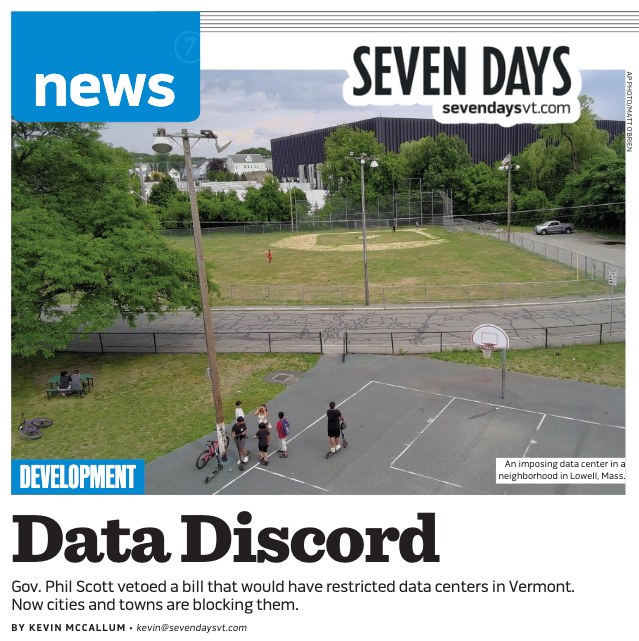
Across the country, communities are rising up
Across the country, communities are rising up to push back on large-scale data centers – many of which are being built to power the AI boom – and the skyrocketing energy costs, water use, and pollution that can come with them.
This year, Governor Phil Scott vetoed a tripartisan bill that would have provided some of the nation’s strongest data center protections, leaving Vermonters exposed to the negative impacts these facilities can have on communities. 52 Republican Representatives joined him in killing these desperately needed protections by voting to sustain his veto.
Now, other states are moving to block data centers, and developers will look for places that haven’t taken action. Thanks to Governor Scott, Vermont is unprotected and could likely be one of them.
We need to send a message:
DON’T DATA CENTER VERMONT.
Resources

Emissions

Location
TAKE ACTION
Vermont lawmakers worked to pass a meaningful policy to protect Vermonters and our communities from Big Tech’s large-scale data centers – but Governor Scott vetoed it. Now, we the people must demand our legislators and statewide leaders stand up to protect our communities.

Data Centers in Vermont: A Timeline
-
The first known attempt to bring a large-scale data center to Vermont was in St. Albans in 2025 when Sean Adkins, then town manager, worked with a developer to bring one of two planned projects – the larger being 50 megawatts — to town. (VTDigger)
-
Recognizing the rapid expansion occurring nationwide and the need to set proactive and preemptive guidelines, lawmakers spent much of the 2026 Vermont legislative session considering how Vermont could prepare and protect our environment and communities from unchecked data center development. The product was called the ‘Sustainable Data Center Deployment’ bill and was designed to ensure that if large-scale data centers came to Vermont, they would do so in a way that protected ratepayers, natural resources, local communities, and the state’s legally binding climate commitments.
H.727 would have established clear expectations before projects were proposed, providing greater transparency, oversight, and community protections while creating a more predictable process for future development.
-
The bill passed both the House and Senate with overwhelming bipartisan support, including a 26-3 vote in the Senate.
-
Unfortunately, despite months of testimony in the legislature about the need for protections in Vermont, Governor Phil Scott vetoed the bill. Then, 52 Republican legislators, many of whom supported the bill previously, followed suit and voted to sustain Scott’s veto when the legislature tried to override it . As a result, H.727 did not become law and Vermonters remain vulnerable to unchecked data center development in the Green Mountain State.
That same day, Americans for Prosperity, a dark money-funded, out-of-state interest group thanked Governor Scott for his veto
-
Less than a month after H.727 was vetoed, news broke that a data center is one of the three potential projects being explored in Vernon at the site of the former Vermont Yankee nuclear power plant. (VTDigger)
-
Governor Scott doubled down on his veto. He told Seven Days that “the likelihood of a data center in Vermont anywhere in the future is slim to none” (VTDigger)
-
With no protection coming from the state, nearly 20 Vermont communities are taking matters into their own hands. Towns — including Norwich, Sharon, Bethel, Milton, Lincoln, Pownal, and Winooski — are pursuing moratoriums or regulations. Colchester, Manchester Center, Montpelier, Plainfield, Barre Town, Cabot, Bristol, Essex Junction, Hinesburg, Burlington, and Cambridge are pursuing advisory resolutions. (SevenDays) (VTDigger)
-
On election day, voters across the country rejected unchecked data center development. In Texas, one of the nation’s biggest data center markets, Governor-elect Gina Hinojosa has pledged a moratorium on new data center approvals until lawmakers pass real protections. As other states shut the door, developers will look for states without data center protections, like Vermont.
About Data Centers
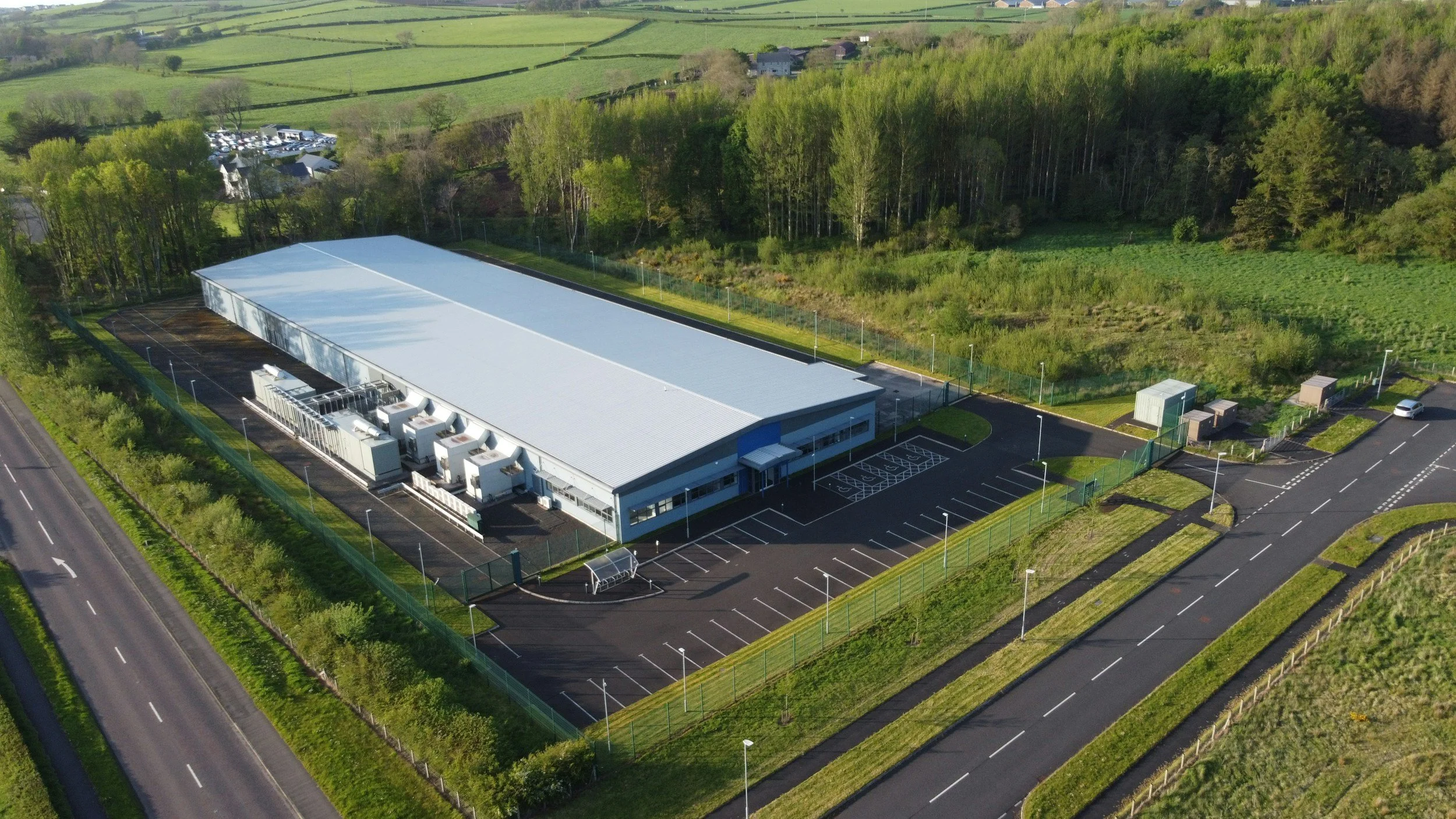
Data centers are arriving in communities across the country faster than anyone can keep up — and in state after state, the story has been the same: data centers are using enormous amounts of energy, water, and land, leading to higher costs and more pollution. Large-scale data centers rely on water to manage the heat generated by computer servers. Right now, communities are dealing with very real impacts on their water quality and water supply. And to keep up with the sky-rocketing demand in energy, utilities are building enormous new infrastructure to serve the data centers, and in many places people are paying more for their electricity because of it – all at a time when household budgets are already strained.
Vermont currently does not have any large-scale data centers, but that does not mean the state is immune to their development. There have already been proposals to develop data centers in Vermont, and with the meteoric rise of AI, pressure for their development will continue. There are many significant issues with large-scale data center development – and overwhelming public concern – across the nation and in Vermont. Currently, thanks to Governor Scott’s veto, Vermont has inadequate protections to safeguard against the potential negative and costly consequences of data center development.
Let’s protect our state from Big Tech and tell our elected officials: Don’t Data Center Vermont!
PRESS


Winooski City Council Weighs Data Center Ban After Phil Scott Veto
BURLINGTON FREE PRESS • NOV. 17, 2026
With no statewide protections in place, Winooski is considering banning data centers within city limits.
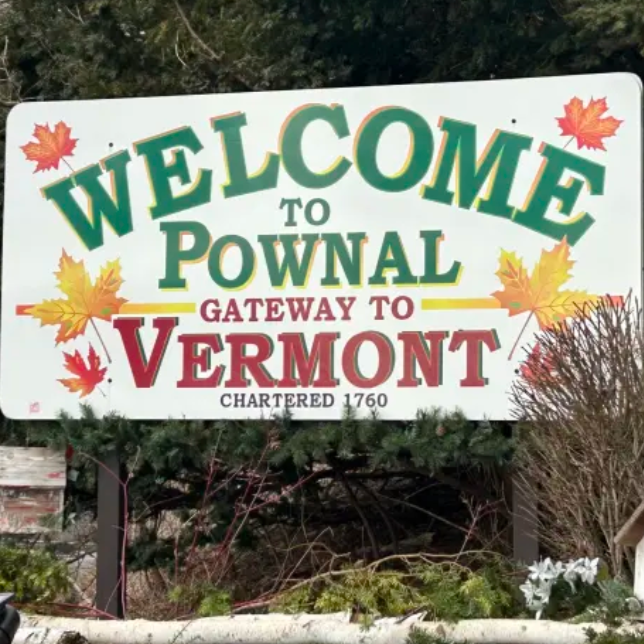
Pownal Weighs Two-Year Data Center Moratorium
SEVEN DAYS • SEP. 9, 2026
Absent state action, Vermont towns are taking local action to protect their communities from unchecked data center development
Absent State Action, Vermont Towns Move to Block Data Centers
BENNINGTON BANNER • Nov. 17, 2026
Pownal’s Select Board is considering a townwide moratorium to give the town time to study data centers and consider regulations.
Roughly Two-Thirds of Vermonters Support a Statewide Ban on Large Data Centers, Poll Finds
Vermont PUBLIC • OCT. 2, 2026
64% of respondents would support a ban on large data centers. Just 20% would not.